Walkthrough
The tanks, in the order you’ll see them
The route is more or less linear. You enter, you drop down to the lower level, you loop through nine main galleries, you come out into the gift shop. Some of these tanks deserve twenty minutes each. Some are two-minute stops. Six years backstage; here’s where I’d actually spend the time.
1. Canadian Waters
The first proper gallery after the entrance. Cold-water tanks with lake sturgeon, Atlantic wolf-fish, the giant Pacific octopus (usually behind driftwood, be patient), and the North Pacific kelp forest. Most visitors walk this one too fast because it’s the appetiser. Slow down. The octopus is often awake if you wait five minutes.
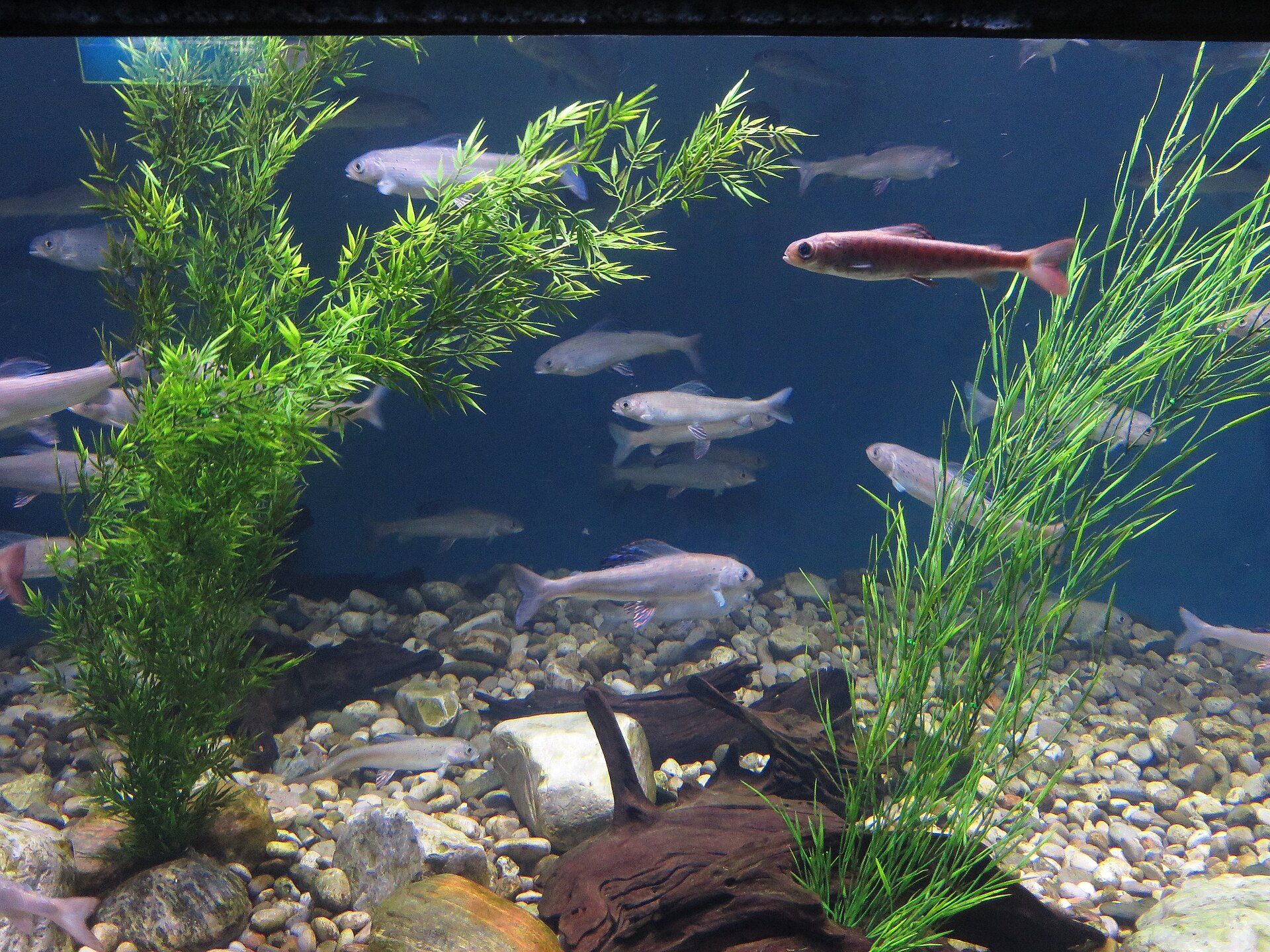
2. Rainbow Reef
The Indo-Pacific coral reef tank. Yellow tangs, damselfish, wrasses, occasional shark cameo. Kids love this one because there’s constant motion and the fish are colourful. Photograph badly — the acrylic is thick and reflective. If you want a good coral-reef photo, cup your hands around the phone at the glass to block the reflection.
3. Dangerous Lagoon — the shark tunnel
The famous one. A 96-metre acrylic tunnel underneath the main predator tank — sandtiger sharks, sawfish, sea turtles, giant grouper, southern stingrays. You ride through on a moving walkway, or you step off it and stand on the fixed platform beside for as long as you want. There is a fixed platform. Nobody tells first-time visitors about it. Use it.
Honest bit: the walkway is very slow, and on a busy Saturday people bunch on it because the entrance-side crowd stops to photograph. If you step off onto the platform for the first two minutes, then rejoin at the far end, you skip the bunching and see the whole tank at your own pace. The staff will not stop you; the platform exists exactly for this.
4. Ray Bay
A shallow tank of cownose rays, southern stingrays and blacknose sharks in a doughnut shape you can walk around. Bay windows at rays-eye level. The best five minutes in the aquarium for a small child. Feeding times are on the daily schedule; if you want to see the rays feed, this is where you plan around.
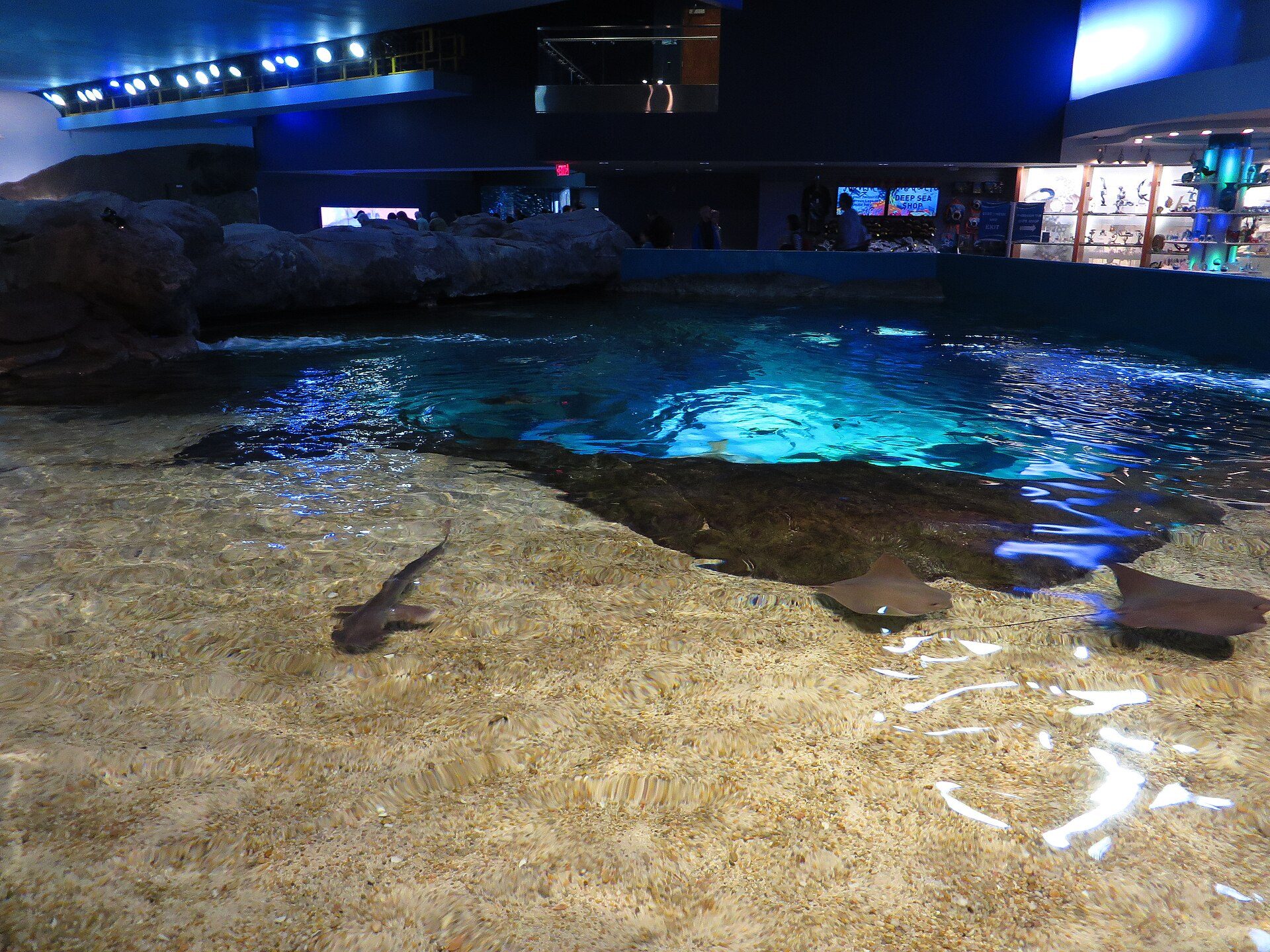

5. Discovery Centre — the touch pool
A shallow shark-touch pool with juvenile bamboo sharks, epaulettes and occasional horn sharks. You put two fingers gently on the back, along the direction of the scales. Rangers are on it constantly — they will tell you if you are being clumsy. Kids from 6 upwards handle it fine; under 4 usually can’t reach the pool comfortably. Under 3, honestly, skip this one and let them press their nose to the Rainbow Reef glass instead.
6. Planet Jellies
The jellyfish gallery. Four cylindrical tanks lit from below on a slow rotation of colour. Moon jellies mostly, Pacific sea nettles in one tank, upside-down jellies in another. The most photographed gallery in the whole aquarium and, for once, deservedly. On a slow evening in October you can have one of the tanks entirely to yourself.
Photography note: the acrylic curves. Wide-angle phone photos exaggerate the curve at the edges; step back and use zoom for a straighter frame.
7. Life-support gallery
Everyone walks past this. Don’t. It’s the corridor after Planet Jellies with the see-through pipes and pumps that keep the shark tank oxygenated. Six pumps, three redundancy layers, half a million litres of saltwater filtered every hour. There’s an interpretive display explaining it in plain English. This is the tank I show my nieces first.
8. Swarm — the sardine tank
A cylindrical acrylic tank of Pacific sardines swimming in a coordinated shoal. Turns and turns. Two minutes if you’re moving through, ten if you sit down (there’s a bench opposite). The best mindfulness break in the aquarium; I’ve seen people take work calls in front of it.
9. Shoreline Gallery
The last main gallery before the exit. Tide-pool creatures, spider crabs, urchins, a small giant Pacific octopus tank that’s often more active than the one in Canadian Waters. Take your time here; nobody does, because they smell the gift shop.
Small tanks visitors miss
- The Amazon tank, tucked in the corridor between Rainbow Reef and the shark tunnel. Piranha, arowana, sometimes a stingray.
- The seahorse column, in a small alcove off the Discovery Centre. Yellow lined seahorses; hold your kid up to look at them.
- The eel tunnel, embedded in a wall between Ray Bay and the touch pool. You need to look for it. A small hole in the acrylic pillar with a green moray eel inside.
If you slow down for the small ones, the visit doubles in value.